





How to Get Toned Arms | Crunch Fitness
October 30, 2026

Wondering why carrying groceries, lifting your suitcase, or reaching for something on a high shelf sometimes feels harder than it should?
Building toned arms isn’t just about appearance; it can also make everyday activities feel easier and help you move through your day with greater confidence. You don’t need to be a gym expert or memorize every exercise in the weight room.
A simple, balanced routine can help you gradually build strength and see more definition in your arms.
In this article, we’ll explain what toned arms really mean and share beginner, intermediate, and advanced workouts. You will learn how to set up your routine, how often to train, and how nutrition and recovery support your progress. We will also talk about common mistakes, useful tips, and how Crunch Fitness can help you reach your goals.
Ready to make those grocery bags feel a little lighter?
Let’s get started!
To get toned arms, combine resistance training with balanced nutrition, regular movement, and enough recovery. A toned arms workout builds the muscles that create shape and definition, while changes in body composition can make that definition more visible.
But what does “toned” mean? Even though the word often appears beside tiny dumbbells and determined faces, toning isn’t a separate fitness process. It generally means developing muscle while maintaining or reducing the body fat covering it.
That is why an effective arm workout routine should include triceps, shoulder, and biceps exercises, and upper-body movements such as rows and presses.
These arm exercises help you build balanced strength, not just work one muscle. Your arms will look more defined and feel stronger during workouts and daily tasks.
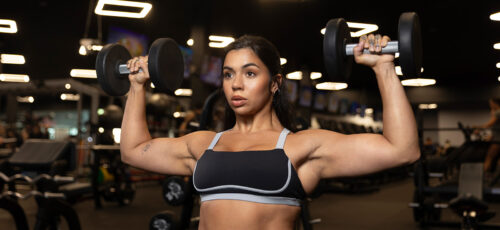
An effective toned arms workout trains the whole upper body, using a balanced mix of pushing, pulling, and targeted movements. Instead of focusing only on what you can see in the mirror, it also works the supporting muscles that help your arms move efficiently and maintain proper form.
Check out the exercises below for every fitness level, from beginner movements to more advanced challenges. Choose the routine that matches your experience and get those arms moving.
This beginner arm workout routine introduces foundational pushing, pulling, and curling movements. Complete two sets of 10 to 12 repetitions for each exercise, resting for 60 to 90 seconds between sets.
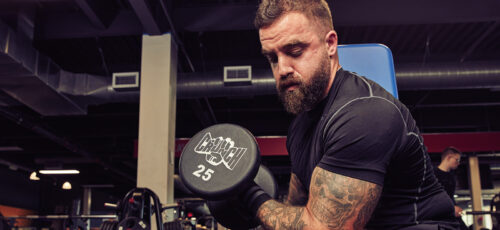
A classic biceps exercise for a reason: curls strengthen the front of your upper arms and make lifting grocery bags or your favorite coffee mug feel easier.
How to Do It
Wall push-ups are a good starting exercise to strengthen your chest, shoulders, and triceps. The wall takes on some of the resistance as you learn the movement, making it easier to practice.
How to Do It
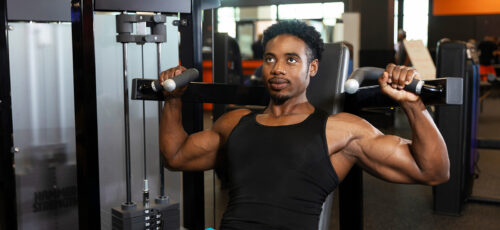
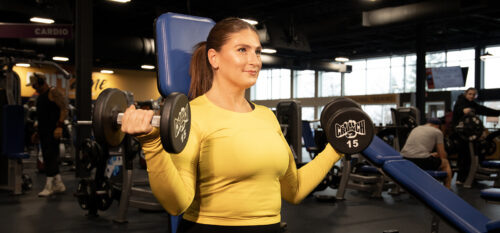
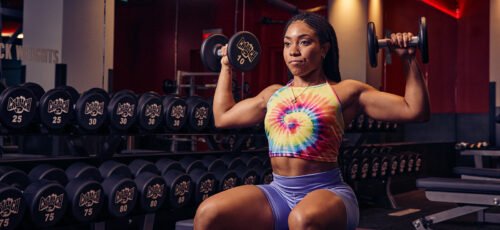
This shoulder exercise builds upper-body strength, and sitting down helps you stay stable. It is a good place to start if standing presses feel hard to balance.
How to Do It
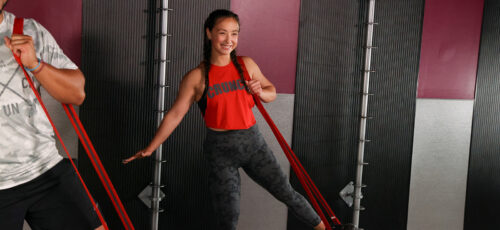
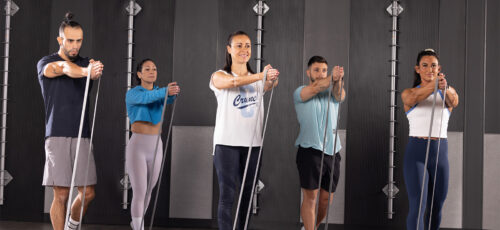
Band rows work your upper back and biceps and help improve your posture. They are especially helpful if you spend a lot of time sitting at a desk.
How to Do It
Triceps kickbacks work the back of your upper arms with a simple elbow-extension movement. Even with light weights, your triceps will still get a good workout.
How to Do It
Are you new to upper-body training? Crunch’s guide to the best shoulder strength exercises explores bodyweight, resistance-band, and dumbbell movements to help you build a strong foundation before increasing the challenge.
The intermediate routine introduces more resistance and compound exercises. Complete three sets of 8 to 12 repetitions per exercise, using a weight that challenges you while allowing controlled movement.
Hammer curls use a neutral grip to work your biceps, brachialis, and forearms. They are a bit more challenging than regular curls.
How to Do It
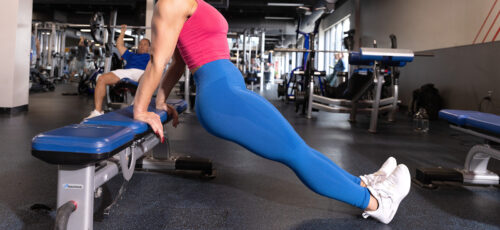
Incline push-ups challenge the chest, shoulders, triceps, and core while remaining more accessible than floor push-ups. As you grow stronger, use a lower surface to increase the difficulty.
How to Do It
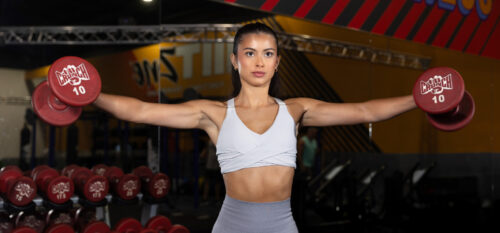
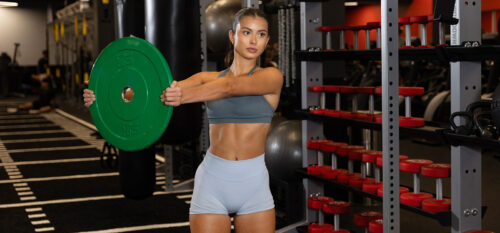
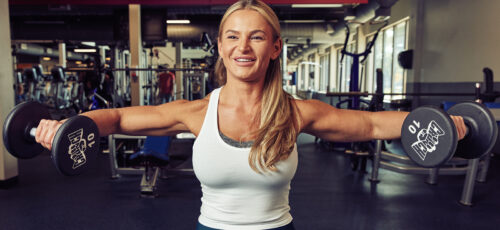
Lateral raises work the sides of your shoulders and can help your upper body look more defined. Focus on controlled movement rather than heavier weights.
How to Do It
Cable pushdowns provide steady resistance for your triceps as you extend your elbows. Keep your upper arms still throughout the exercise.
How to Do It
Single-arm rows work your upper back, biceps, and grip, and let each side work on its own. They also help balance out the pushing exercises in your routine.
How to Do It
If curls are becoming your new favorite gym activity, explore Crunch’s 5 best bicep exercises for building bigger arms, and more ways to train your arms with dumbbells, barbells, and cables.
This advanced workout uses more demanding compound movements and exercise variations. Complete three or four sets of 6 to 12 repetitions, depending on the exercise. Prioritize control over load, especially when working overhead or using body weight.
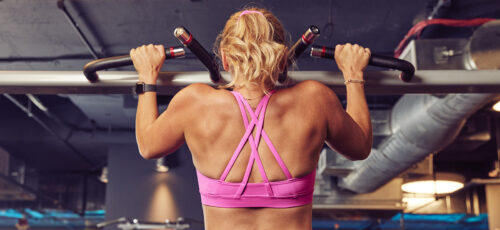
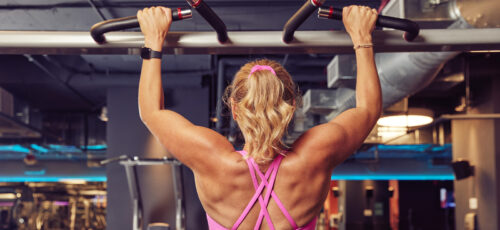
Chin-ups use your body weight to work your back, biceps, forearms, and core. They are challenging and effective for building strength.
How to Do It
Bringing the hands closer together increases the demand on the triceps while still training the chest, shoulders, and core. Use an incline or your knees if you cannot maintain proper form from the floor.
How to Do It
The Arnold press adds rotation to a regular shoulder press, working several parts of your shoulder muscles. Your shoulders do most of the work in this exercise.
How to Do It
Barbell curls let both arms work together and often allow you to use more weight than dumbbell curls. Keep your movement controlled and avoid using your whole body to lift the bar.
How to Do It
Dips are an advanced exercise that works your triceps, chest, and shoulders. If body-weight dips are too hard, try using an assisted dip machine or a resistance band.
How to Do It
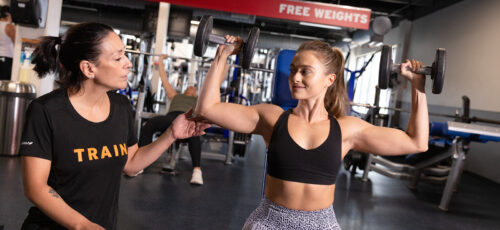
Advanced exercises take more than just determination. If you want help with technique, resistance, or workout planning, personal training at Crunch can help you build a program that fits your needs.
An arm workout should feel like a plan, not a scavenger hunt around the dumbbell rack. Before you start, think about how much time you have, what equipment is available, and when you last trained your upper body. These answers will help you decide how long and intense your session should be.
A flexible arm workout might follow this general structure:
For example, a 35-minute session might include a short warm-up, two sets each of resistance band rows, seated dumbbell shoulder presses, dumbbell biceps curls, wall push-ups, and triceps kickbacks. Rest as needed between sets and prioritize controlled movement over rushing to finish.
The Physical Activity Guidelines for Americans recommend muscle-strengthening activity at least twice a week, but your schedule should reflect your program and recovery. Need more shoulder-specific ideas? Explore Crunch’s guide to upper body strength before planning your next session.
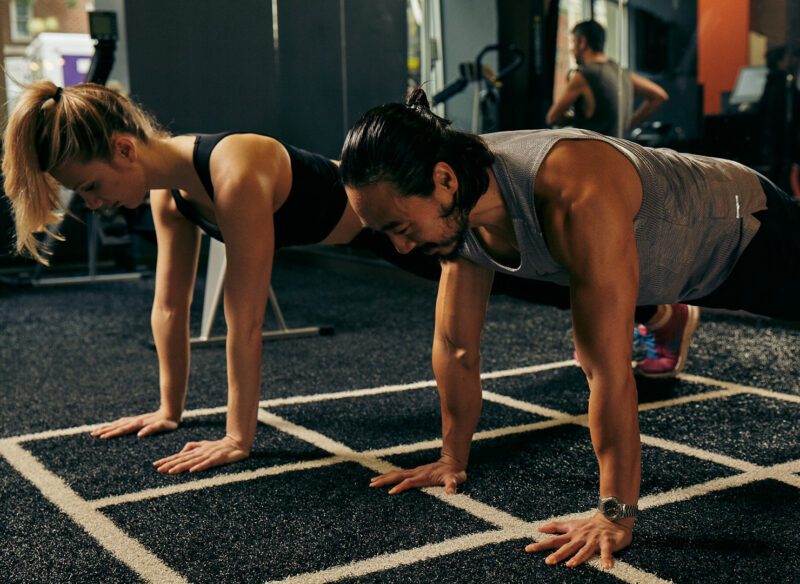
Most people can train their arms two or three times weekly, with recovery between sessions. More is not always better; the goal is quality work without persistent soreness or weaker performance.
A Sports Medicine review found twice-weekly training may promote more growth than once-weekly training. However, the Journal of the Human Kinetics study also reported similar strength and muscle gains when equal training volume was divided across two or three weekly sessions.
“Training muscle groups either twice or three times per week results in similar increases in muscular strength and hypertrophy in young adult trained men when volume is equated between the training conditions,” the JHK report concluded.
A Monday and Thursday schedule may suit many gym-goers, while others may spread shorter sessions across three days. If soreness persists, elbow discomfort develops, or performance declines, reduce the workload or allow more recovery before training your arms again.
A practical approach is to follow a consistent resistance-training routine while giving your body enough time and nutrition to recover and adapt. Toning doesn’t require special exercises; it comes from building muscle and, if needed, changing your overall body composition.
These five principles explain how to make an arm program productive, not just tiring.
Resistance training gives the biceps, triceps, shoulders, and supporting muscles a reason to adapt. Dumbbells are useful, but they are not the only option. Cables provide tension throughout a movement, machines add stability, bands are portable, and bodyweight exercises can be adjusted through leverage or elevation.
Pick a resistance that feels challenging but still lets you control the movement. If the exercise feels too easy, try more resistance or a harder version. If you have to swing, cut the movement short, or use your whole body, lower the weight.
Discover more: How do I Use Resistance Training For Weight Loss
Progressive overload means gradually increasing the demand placed on a muscle. Adding weight is one method, but not the only one. You can perform another repetition, add a set, improve your range of motion, slow the lowering phase, or use a more difficult variation.
Change only one thing at a time and keep track of it. For example, go from three sets of eight curls to three sets of ten before picking a heavier dumbbell. Small steps are easier to measure and recover from than making big changes all at once.
Compound movements involve several joints and muscle groups. Rows train the back and biceps, while presses recruit the chest or shoulders alongside the triceps. These movements use workout time efficiently and teach muscles to work together.
Isolation exercises target one area more directly. Curls, pushdowns, and lateral raises can add targeted work without repeating a complete upper-body session. Neither category is automatically superior. Compound exercises can form the foundation, while isolation movements address specific goals, imbalances, or muscles that need extra attention.
There is no single “toning range.” A 2021 study found that muscle growth can occur across a broad range of loads when sets are performed with sufficient effort, although heavier loads tend to produce greater improvements in maximal strength.
For many arm exercises, 8 to 15 controlled repetitions can be a practical starting range, depending on the exercise, resistance, and training goal. Heavier compound exercises may use fewer reps, while lateral raises or band exercises might work better with more reps.
Recovery lets training adaptations happen. Sleep, daily nutrition, stress, training experience, and total workload all affect how quickly someone feels ready again.
Normal post-workout fatigue should gradually improve. Persistent soreness, joint discomfort, disrupted sleep, or declining performance may indicate that the program exceeds your current recovery capacity.
Instead of giving up on your routine, try changing the number of sets, the resistance, the exercises you choose, or how often you do hard sessions. Progress takes effort, but you also need time to recover.
Read: How to Recover From Intense Workouts: Crunch’s Guide to Post-Workout Recovery
No food can target arm definition, but an eating pattern can support muscle repair, training energy, and body composition changes. Include a protein source, such as eggs, fish, poultry, Greek yogurt, tofu, beans, or lentils. Protein supplies the amino acids your muscles use after resistance training.
Carbohydrates are important too. Foods like oats, rice, potatoes, fruit, and whole-grain bread can give you workout energy and help you recover. Add vegetables, healthy fats, and enough fluids to complete your meals.
For practical meal-building ideas, explore Crunch’s guide to eating a balanced diet. Crunch’s pre- and post-workout nutrition article explains how protein and carbohydrates can fit around training.
You might stop seeing progress with arm toning even if you work out often. Sometimes the issue is not how hard you work, but how you use your effort. Watch out for these common mistakes:
There is no quick fix, but making smart choices can help you see results sooner. Focus on being consistent instead of expecting a fast transformation.

Crunch Fitness provides the guidance, equipment, and workout variety needed to build stronger, more defined arms. Available services, amenities, and classes may vary by location.
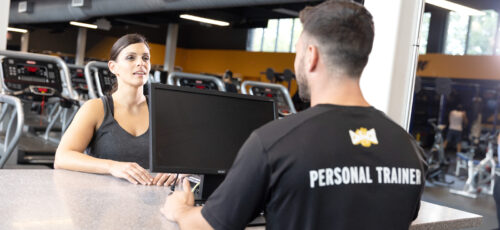
A CrunchONE Kickoff or personal training session can help identify your starting point, goals, and experience level. A trainer can then recommend appropriate exercises, resistance, and progression.
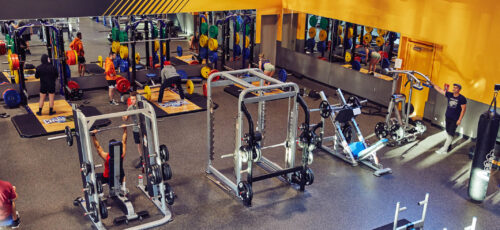
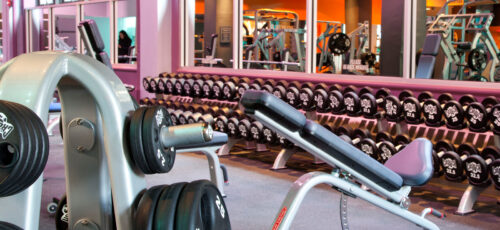
Crunch locations offer strength training options such as dumbbells, cable stations, resistance machines, benches, and functional equipment. This variety makes it easier to train your biceps, triceps, shoulders, chest, and back in different ways.
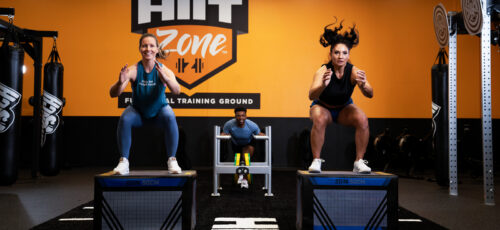
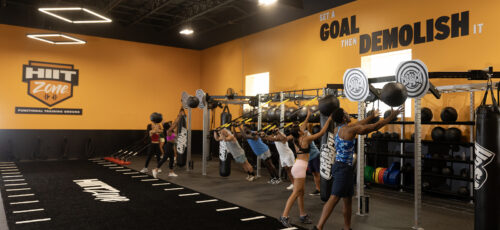
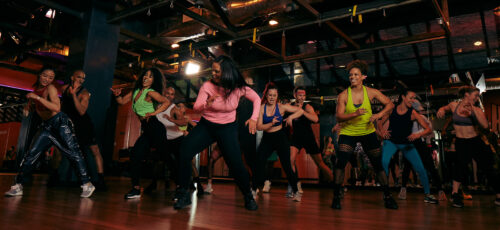
Group fitness classes can add structure, energy, and variety to your routine. Explore your local Crunch class schedule to find an upper body or full body workout that matches your fitness level.
Crunch promotes a culture of positivity, inclusivity, and fun with no judgments by providing an environment for all individuals, regardless of their health and fitness goals. Find a Crunch gym near you to try our free trial membership, or join Crunch now. We’re here for you – at the gym or at home. Access the best live & on-demand workouts anytime, anywhere with Crunch+. Ready to get sweaty? Try hundreds of workouts for free! Start your free trial now!
Yes, you can build stronger, more defined arms with bodyweight and resistance band exercises. Push-ups, band rows, triceps extensions, and plank moves work well, especially as you make them harder over time.
Good exercises for toned arms are rows, push-ups, shoulder presses, biceps curls, triceps pushdowns, and lateral raises. Work your arms, shoulders, chest, and upper back for a balanced routine.
Start with two or three sets of 8 to 15 repetitions per exercise. The final repetitions should feel challenging without your form breaking down.
No, arm exercises alone cannot selectively reduce fat from your arms. They can help build muscle and improve arm strength and definition, while changes in overall body fat depend on factors such as nutrition, physical activity, genetics, and overall energy balance.
It can take weeks or even months to see more defined arms. How fast you notice changes depends on where you start, how often you train, your nutrition, recovery, and genetics. You’ll likely get stronger before you see big changes.
Your arms might get stronger before you notice changes in how they look. Track your progress, since visible results can take longer and vary from person to person.