









Best Low Impact Strength Training Exercises for Joint Health
January 29, 2026

If you’ve ever finished a workout thinking, “My muscles feel great, but my joints are mad at me,” you’re not alone. For many people, strength training isn’t about a lack of motivation. Instead, it often feels like too much stress on the knees, shoulders, or hips. This is where low-impact strength training can make a real difference.
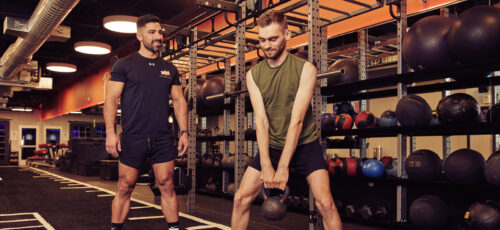
Low impact doesn’t mean you stop building muscle or getting stronger. It means you train in a smarter way. You slow down, start from a stable position, keep your feet hip-width apart, engage your core, and move with control instead of rushing.
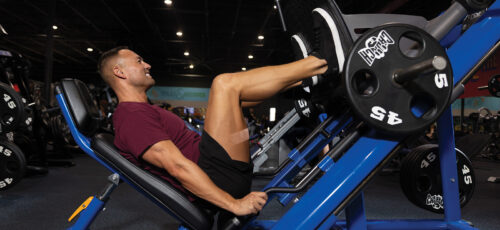
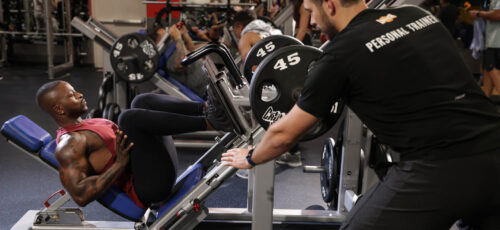
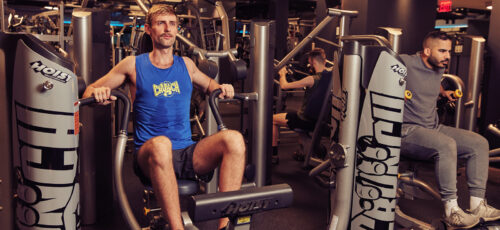
Picture fewer jumping jacks and more focused moves like leg presses, chest presses, resistance band exercises, and bodyweight work. These protect your joints while still helping you build muscle and improve bone strength.
Here’s the thing: your body benefits more from consistency than intensity. Regular strength training, especially low-impact workouts, can help you build stronger bones, improve balance, and keep your joints healthy without leaving you sore for days.
This is important whether you’re returning after a break, dealing with joint pain, or simply tired of high-impact exercises that leave you feeling worn out.
In this article, we’ll walk you through:
If you want some help along the way, trainers and classes at Crunch Fitness can support you in building strength, confidence, and momentum, all while being gentle on your joints.
These exercises focus on control, alignment, and muscle engagement, rather than using momentum or putting extra stress on your joints.
Picture slower repetitions and movements that make you stronger while protecting your knees, hips, shoulders, and back.
Whether you’re returning after a break, moving away from high-intensity workouts, or just looking for a better way to train, these low-impact exercises can easily become part of your fitness routine.
Below are 10 joint-friendly strength training exercises, plus tips to help you get more benefits with less strain.
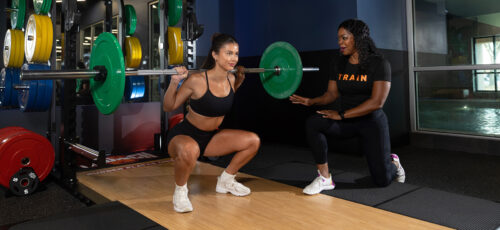
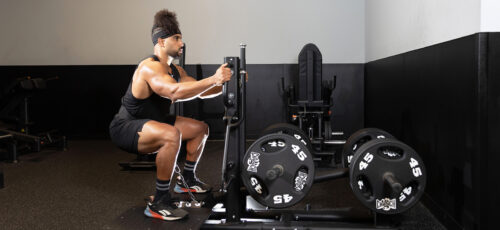
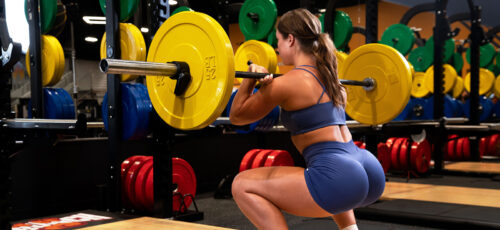
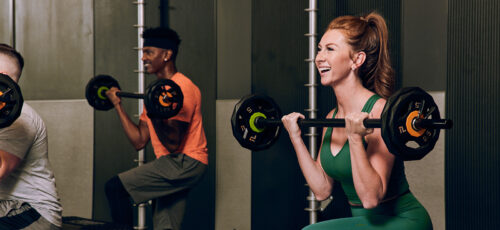
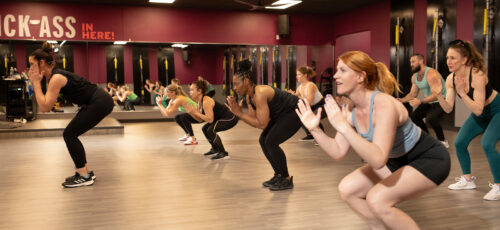
The squat is a foundational movement that strengthens your quads, glutes, hamstrings, and core while supporting bone density and overall health.
How to do it
Trainer tip: If knee pain shows up, reduce depth or use a box or bench to control how low you sit. Squats done well build muscle and protect joints.
Wall sits are an isometric exercise that builds leg strength and endurance without movement. They are perfect for sensitive knees.
How to do it
Why it works: You strengthen muscles without putting extra stress on your knee joints, making this a great low-impact strength option for beginners and older adults.
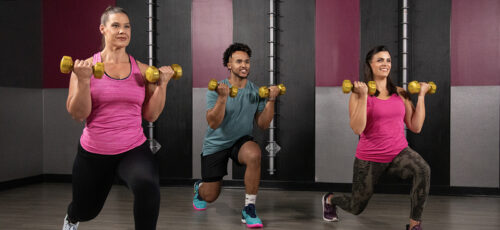
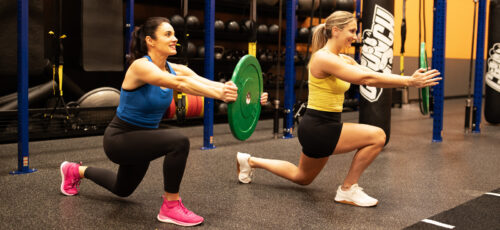
Reverse lunges help build lower-body strength and balance, and they are easier on the knees than forward lunges.
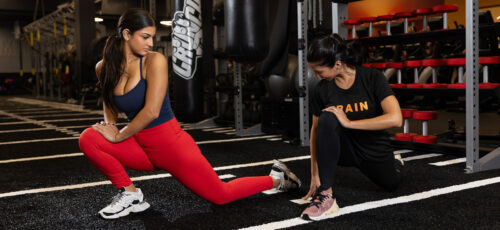
How to do it
Trainer tip: Hold one dumbbell at chest height for added core engagement without heavy weights.
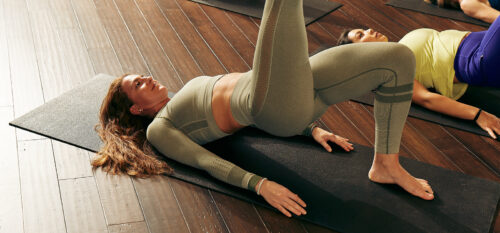
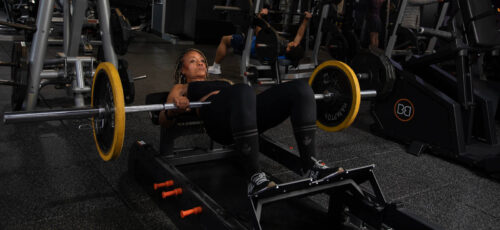
Glute bridges strengthen your glutes, hamstrings, and back muscles, which are important for hip stability and better balance.
How to do it
Why it matters: Strong glutes help protect your knees and lower back during everyday movement and regular strength training.
This upper-body exercise improves posture and strengthens your back and shoulders without putting strain on your joints.
How to do it
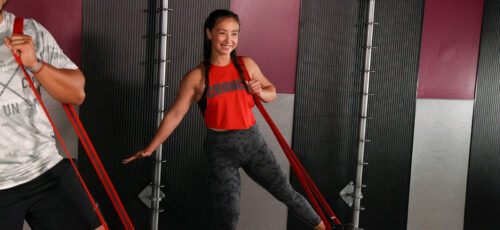
Resistance band exercises are a powerful, low-impact alternative to machines for building upper-body strength.
Discover more: 10 Best Leg Strength Training Exercises You Can Do At The Gym
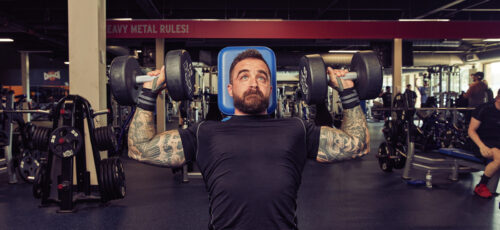
Chest presses help you build strength for everyday activities, such as lifting or pushing doors open.
How to do it
Trainer tip: Doing presses on the floor reduces shoulder stress and is a good option if overhead movement is uncomfortable.
Planks are a low-impact core exercise that strengthens your whole body.
How to do it
Why it works: A strong core helps with balance, posture, and safer movement during all strength exercises.
This exercise works the muscles that stabilize your hips and helps support knee health.
How to do it
Trainer tip: Keep your movements small. More control means more muscle activation and less stress on your joints.
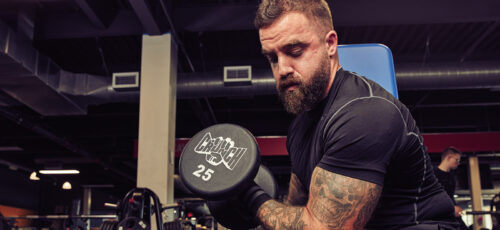
Bicep curls make your arms stronger for pulling and other daily activities.
How to do it
Why it matters: Strong upper arms help protect your shoulders and elbows when you lift things.
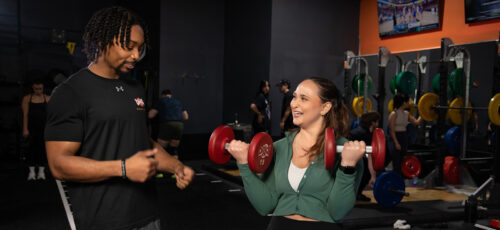
Wall push-ups strengthen your chest, shoulders, and arms while putting very little stress on your joints.
How to do it
To make it harder, step your feet farther back. This increases the challenge without adding impact.
Read: The Most Effective Full Body Strength Routine
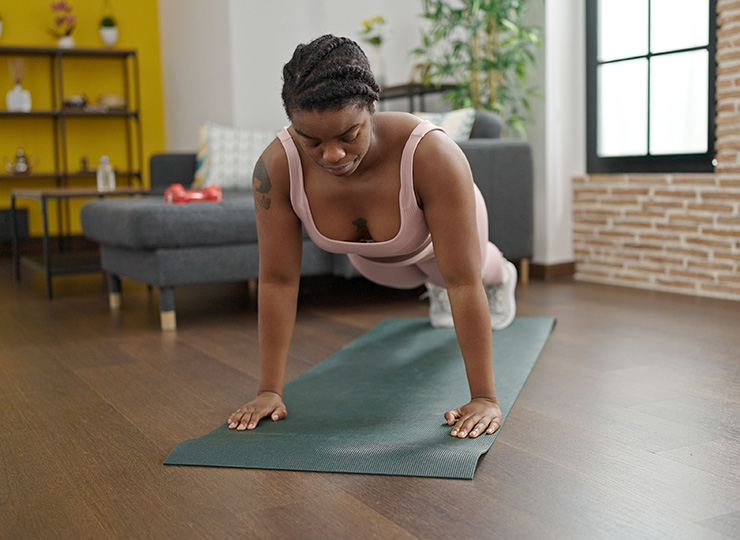
Low-impact strength training isn’t just a gentler option. It’s a smarter and more sustainable way to build strength, protect your body, and keep making progress over time.
Here’s why it works so well for so many fitness levels.
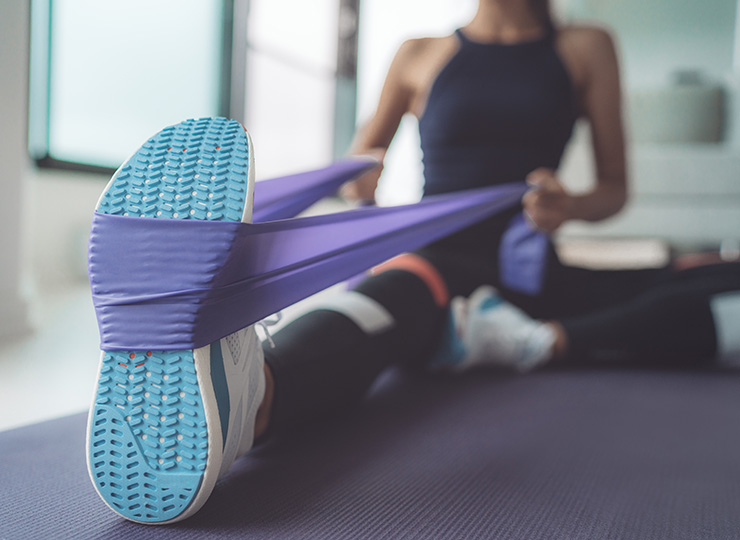
One of the best things about low-impact strength training is that you don’t need a lot of equipment to get stronger safely. With just a few good tools, you can create effective workouts that help you build muscle, improve control, and avoid extra stress on your joints. The goal isn’t to lift the heaviest weights. It’s to move well, stay consistent, and protect your body over time.
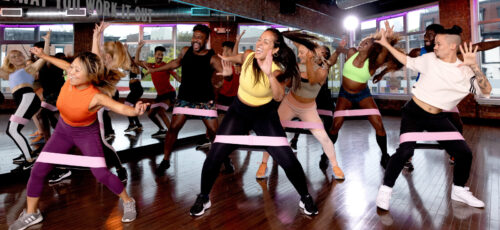
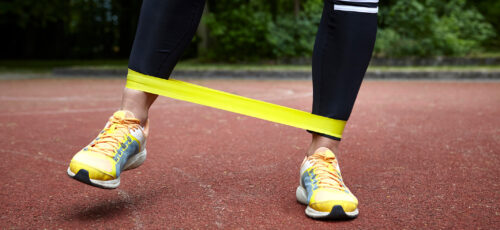
Resistance bands are a great place to start. They are lightweight, easy to carry, and let you add challenges without impact. Bands create steady tension, which helps strengthen muscles and improve joint stability while being gentle on your knees, hips, and shoulders.
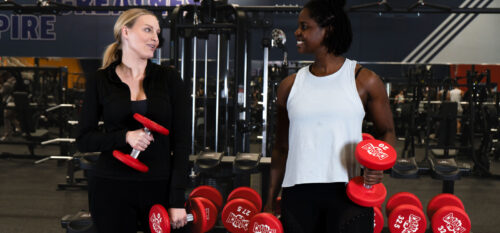
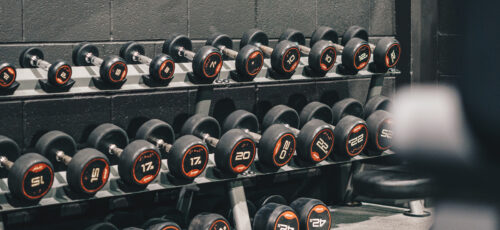
Dumbbells are another key tool. Starting with lighter weights helps you focus on good form, control, and a stable starting position. As you get stronger, you can slowly add more weight without putting too much stress on your joints.
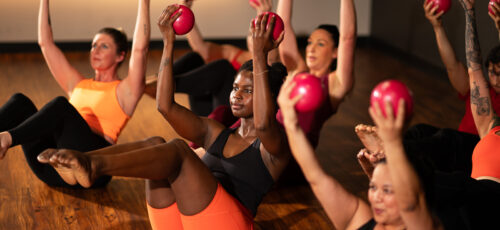
A bench or stability ball adds variety and support. Benches are useful for exercises like chest presses or step-ups, while stability balls help you work on core strength and balance. These tools make low-impact workouts safer, more flexible, and easier to adjust to your fitness level.
Discover more: 7 Low-Impact Exercises for Weight Loss for All Fitness Levels
This sample routine helps you build full-body strength while keeping stress on your joints low. It’s beginner-friendly, easy to follow, and you can adjust it as you get stronger.
Tip: Move with control, rest when you need to, and focus on good form. As you get stronger, you can add more reps, resistance, or rounds without increasing impact.
Crunch promotes a culture of positivity, inclusivity, and fun with no judgments by providing an environment for all individuals regardless of their health and fitness goals. Find a Crunch gym near you to try our free trial membership, or join Crunch now. We’re here for you – at the gym or at home. Access the best live & on-demand workouts anytime, anywhere with Crunch+. Ready to get sweaty? Try hundreds of workouts for free! Start your free trial now!
Low-impact strength training uses slow, controlled movements that are easy on your joints and help you build muscle without jumping or hard impacts. You can use your own bodyweight, resistance bands, or light weights to get stronger in a safe way.
Yes, strength training can be low-impact if you focus on good form, move slowly, and keep your body stable instead of doing fast or high-impact moves.
Absolutely. Low-impact workouts help you build muscle by keeping your muscles working and gradually increasing the challenge, especially if you do them often and use enough resistance.
Low-impact strength training is great for beginners, older adults, people with joint pain or injuries, or anyone who wants a safe and lasting way to get stronger.